Friday, March 28, 2014

Meaning of Life

I honestly believe in the best music you can find the meaning of life.  Maybe that's a bit of a stretch?  But I think it's there.


Take, for example, Pink Floyd's Dark Side of the Moon, an artifact of my birth year, a great year for music.  I've probably listened to this album hundreds of times and still get something new from it even still.  This album has birth, death, capitalism, war, and impenetrable soul, not to mention the nature of sanity and the human condition.  Recently I got to listen to it with Megan, and we both felt the full intensity.  This is undoubtedly Pink Floyd's best, and, at least to me, the best album of all time, period.  I can remember listening to this in high school, in college, and just about every phase of my life thereafter.

Next we listened to this little gem, while Kelly was getting a massage and needed something relaxing:


Grant Green's Idle Moments is probably the definition of laid back, but not in a boring way.  In a word, it is perfect.  Joe Henderson's smooth sax is not so in a "Kenny G" sense, but in a way that you can hear the intensity of his ideas and his breathing--he's stating the theme, meditating, chewing it, and spitting it out.  This is also probably one of the best guitar jazz albums of all time (possibly Wes Montgomery's Incredible Jazz Guitar as a one-better).  It is a long favorite of Kelly's, Amy's, and mine.
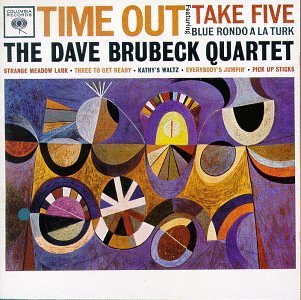

Dave Brubeck's Time Out is undoubtedly the first jazz vinyl I ever listened to.  I happen to own the exact copy that I first heard, thanks to my dad.  Kelly requested to hear it tonight, so I was happy to oblige.  This album was a lot of things, long before my time.  For me it opened my ears to different time signatures, and, of all things, that white people could play good music.

Perhaps by subconscious contrast, or just because I was in the mood, I put on James Brown's Live at the Apollo.  Listening to it this time made me realize that the best instrument James Brown ever played was the audience.  This is a short album and almost feels rushed, but the band is the definition of TIGHT.  I can't think of anything tighter except perhaps Basie or Ellington, and they had to work harder.


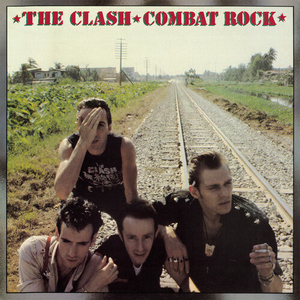
Finally, I put on the Clash's Combat Rock, what Amy used to call "their sellout album."  But this is really the only Clash album for which I knew multiple songs, and the only one I really grew up with.  Nowhere near as listenable perhaps as London Calling, but there are some truly amazing tracks on it, including "Straight to Hell" and "Rock the Casbah."  It also has their most repetitive and well-known song, "Should I Stay or Should I Go."  After all these years, I still like this album.  And perhaps the best part is that it is cheap and easy to come by.  I think this one cost less than $10, and you can probably find it for $5.  One of the best bang for your buck albums.

Sunday, March 2, 2014

We Are the Vinyl Kinks Appreciation Society...

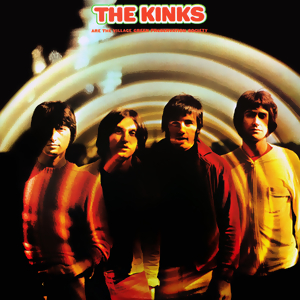
Tonight's treat is The Kinks Are the Village Green Preservation Society.


This is truly one of the greatest albums, and sadly, currently difficult to find in the U.S.  The Kinks were at their most innovative, best musical form, and lyrically best.  While the rest of the world was pondering how awful Vietnam was, the Kinks in 1968 were singing songs about strawberry jam, fading friendships, and overweight felines.  They are probably one of the most understated groups in rock and roll history--perhaps victims of their own success with singles such as "You Really Got Me" and "Lola."  Not that these were bad songs, mind you, just that they were hardly representative of the depth and breadth of the group--no mean feat considering that "You Really Got Me" practically shaped every song to come thereafter.  The Village Green Preservation Society has a certain symmetry to it, songs that could easily get confused ("Picture Book" vs. "People Take Pictures of Each Other"; "The Village Green Preservation Society" vs. "Village Green"), except that these variations are so profoundly different in structure and attitude.  The vinyl listen (mono) is notable in that the bass pops so clearly in each song, and the woodwinds and strings don't crowd the vocals.

One last note about the Kinks.  I especially love how they play happy songs in minor keys and sad songs in major keys--they don't just play with your heartstrings, they manipulate them.  That merry-sounding song you've been jangling and dancing to turns out to be about everything crumbling apart once you listen to the lyrics ("Come Dancing", "Death of a Clown", etc.).

Meanwhile, across the Atlantic Ocean, The Velvet Underground and Nico reveals what was going on in the streets of New York in 1967--drugs, kinky sex, and a profound disregard for any rules about melody, pitch, or time.  Music was a "scene," something that was going on while you were getting your rocks off.  Poor Lou Reed--given shock treatment as a youth to "cure" him of bisexuality, then turned to heroin.  It's kind of remarkable that anything he did ever went heard and recognized.  There's a cliche that this album didn't sell many copies, but everyone who bought one formed a band.  Perhaps there is some truth to that, but more importantly, this album is a testament to some truly dark and real stuff.  "Heroin" says about as much as Naked Lunch.  Lou's death hit me kind of hard last year, and it's weird.  Maybe he and I were more kindred spirits than I would have thought.  Or maybe he just had that effect on everyone.

Also: it's worth mentioning that without Rachel, I probably wouldn't have considered getting or listening to this album.  Thank you!

Wednesday, January 8, 2014

First Picks of the Evening

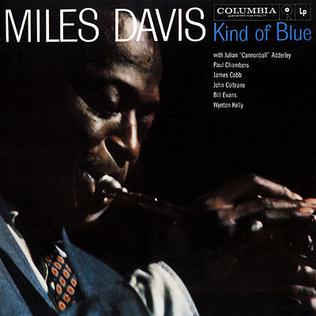
Tonight Kelly and I are listening to the greatest record on the planet.  By that I mean a 6 eye mono (scratches and all) of the original Kind of Blue.  That's right, I own a collectible from 1959.


There are very few albums I feel worth listening to in a variety of formats.  In this case, I can see why the original mono is still noteworthy--you can hear the intake of breath of Cannonball and Trane as they get ready for the melody.  Paul Chambers' bass really fills the entire room.  Many a PhD. has been written about this record.  To me, this record is the "bread and butter" of jazz music.  In order to understand or appreciate jazz, this album lays out the foundation.  Kelly remembers more than half the tunes, even if she can't remember the names, not just because she's heard the record but because I've played them on the sax at home, or whistled them here and there.  I tell myself, even if I could sound half as good as those guys, I will have accomplished something in life.

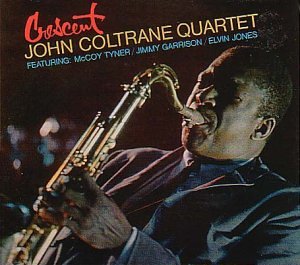
The next record I reached for tonight is this gem from 1964.


It's easy to overlook Crescent because it often gets overshadowed by A Love Supreme from the following year.  I once overheard someone mention this as their favorite John Coltrane album, and I can see why.  It doesn't have the "ship lost in a storm" feeling of A Love Supreme's frantic desperation.  Instead, what we have here is John Coltrane at his melodic best just before he hit that one hard.  Mind you, the title track has its build up and break down, but there is something subdued and hauntingly beautiful.  Kelly and I recently saw Pharoah Sanders play at Yoshi's, and he opened with "Crescent," something I've heard him play so many times.  I can see why he returns to his Coltrane roots so often, before breaking out just a notch or two on his own.

The John Coltrane Quartet is pretty much my vision of the perfect band.  There really isn't any better way to put it than that.  Apparently even Henry Rollins agrees with me.


Thursday, October 31, 2013

The National

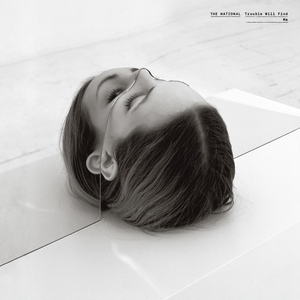
It's probably premature to say this (Arcade Fire's Reflektor just released this week and I have yet to hear it), but my favorite album of 2013 so far is Trouble Will Find Me by The National.

I'm going to say it's Kelly's fault (again) that I even listened to this band in the first place.  A few years ago, she bought their album Alligator on CD (note: don't have it as of yet on vinyl, will be remedied soon).


It was the kind of thing that I put on iTunes, listened to every once in a blue moon, then mostly forgot about.  We saw them perform this summer at the Outside Lands Festival, and it was exciting that they played with Kronos Quartet and Bob Weir of the Grateful Dead.  It was enough of an experience that, with very little to do in South Carolina, I picked up Trouble Will Find Me, with only modest expectations.  As I listened to their album during car trips, I was immediately blown away by the deep melancholy power and...well, there is no other way to say this except that Bryan Devendorf is probably the greatest drummer to come around in the past 30 years, and I mean that without any hyperbole.  I don't know how many times I listed to "Demons" before realizing the song was in 7:4, it was so subdued and unobtrusive.

It forced me to have another listen to Alligator.  Their lyrics are quite subversive and off the wall, in only the best possible way.  Lead singer Matt Berninger isn't the kind of person who tries to be a big rock star, and in interviews he is nerdy and reserved, just the kind of person who propels them into genius.


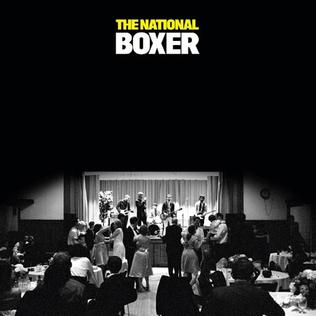
Hunting down from their back catalog, Boxer is a fan favorite and critically acclaimed.  If there is any question about Bryan Devendorf's talent (or if you are just a fan of drums in general), check out "Squalor Victoria."


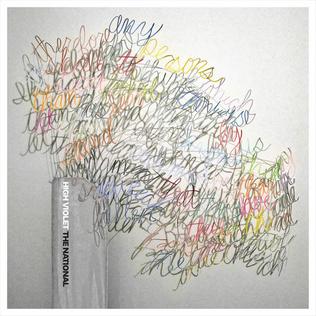
Considered by fans on Amazon to be one of their best, High Violet is nothing short of a masterpiece (though I'm liking Trouble Will Find Me even more), opening up with the line "It's a terrible love..." and only getting all the more intense from there ("...'cause I'm evil...").

I can listen to these albums over and over again and not get bored, finding something new in every single layer--possibly to the dismay of my loved ones.

Tuesday, May 14, 2013

Inner Urge

There are a number of albums on the Blue Note label, but few of them mean as much to me as Inner Urge, by Joe Henderson.


It's easy to see why: it has McCoy Tyner and Elvin Jones, with Bob Cranshaw on bass.  You've basically got the Coltrane Quartet rhythm section with some genius alterations for good measure.  And it's Joe blowing his best.


It's funny, but back in my CD craze days I bought tons of Blue Notes, but somehow missed Inner Urge.  Only when Tower Records was going out of business did I nab it up.  Now it's among my "lesser known favorites."


Is it blasphemy to like Joe Henderson more than John Coltrane?  I don't think so.  Coltrane was his own unique thing, for sure.  But Joe is everything--speed, tone, overblowing, ballads--all of it beautiful.  I'll even listen to some of his lesser known stuff in awe.


I "discovered" Joe originally through his playing with the other Blue Note musicians--Horace Silver, Pete La Roca (Sims), Grant Green, Bobby Hutcherson, Andrew Hill, Eric Dolphy.  It didn't take long to realize he was the secret ingredient that made all of those albums great.


Thursday, May 9, 2013

Shine On You Crazy Diamond


Last night I got to listen to Pink Floyd's Wish You Were Here, one of my birthday presents from Rachel.

I don't always abide what "remastering" does, but on 180 gram vinyl, it's hard to find any fault--it sounds absolutely amazing.  The sound effects, bass, keyboard, drums--and David Gilmour's guitar work is at his absolute best.  This was Pink Floyd's "jazziest" album, probably their most musically rooted in tradition--from Roy Harper's outlandish vocal on "Have a Cigar" to the soulful saxophone solos of "Shine On You Crazy Diamond."  You can read about the legend of the making here.

As for what the album means to me personally, mostly I remember listening to it in high school.  It's an introspective album that commands introspection from its listener.  It isn't gloomy or maudlin--there's no "Goodbye Cruel World" or "Comfortably Numb" here--instead, it is pure blues, reveling in the sounds and making each note last.  I never thought of it as my "favorite" Floyd album, but there is no doubting its place in Floyd's best.  It's the kind of thing you can hear thousands of times and still hear something new each time.

There is also something about the artwork and packaging--"Hipgnosis," aka the recently departed Storm Thorgerson, created something very special.  The 180g vinyl reissue includes a poster, interior art, and original sleeve (as well as a protective sleeve), giving something visual that only enhances the album, without taking anything away.

Wednesday, February 13, 2013

Neon Meate Dream of a Octafish


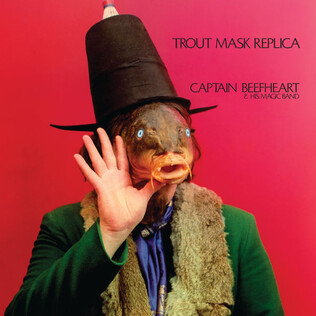
Sooner or later I was bound to get it.  The 180 gram vinyl has the original credits (DRUMBO, aka John French, missing from the credits) and with no "insert" with the lyrics and drawings by THE MASCARA SNAKE.

How to describe the music?  Kelly wouldn't even speak to me when she entered the house until I turned it off.  You either love it or hate it--or don't know how to classify it and leave it alone entirely.

The legends of the album are as surreal as the album itself.  Captain Beefheart (Don Van Vliet) took his magic band to a house and kept them there rehearsing for eight months, where he used brainwashing techniques to break each of the members down.  Then, at the end of it all, he took his entire band to Frank Zappa's recording studio and laid down all 20 tracks in a single session.

Rolling Stone has put this as #60 in the list of Greatest Albums of All Time, and it is a favorite of the likes of Tom Waits, PJ Harvey, and Matt Groening.

I remember first hearing it through Amy's roommate Bob out on Cape Cod when we first started dating.  Not only did it fascinate me and make me laugh, but it also fascinated Bob that I started to sing along with such compositions as "Neon Meate Dream of a Octafish" and "Ella Guru."

A squid eating dough in a polyethylene bag is fast and bulbous.  Got me?